

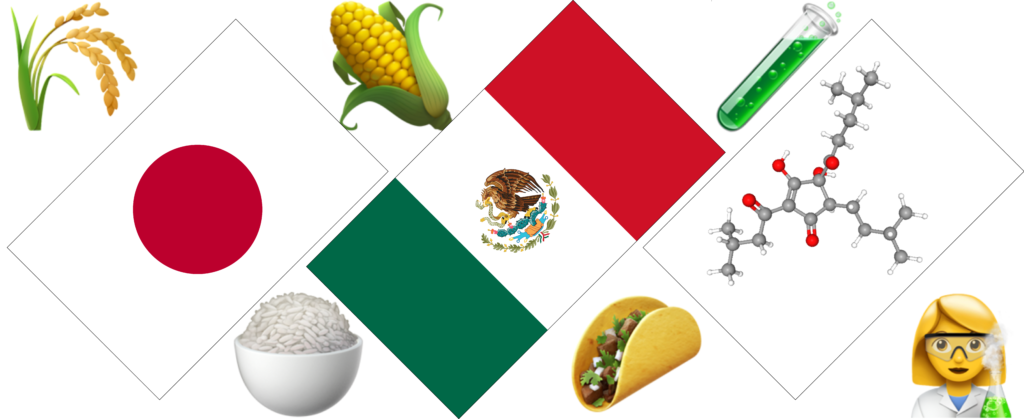
I love Japanese lagers. Since Sapporo started brewing beer in 1876, maybe some Japanese, like my family, have evolved at the DNA level to have an affinity for them.
But things changed when I moved to the U.S. 12 years ago, especially here in L.A., where I encountered Mexican lagers. I was struck by their drinkability and how well they pair with Mexican snacks like tacos, nachos, and ceviche. Mexican lagers might have imprinted themselves onto my epigenome too.
What about you? Which do you like better: Modelo or Sapporo (and I mean the Sapporo now brewed in Escondido)? I drink them pretty interchangeably. But hold on—can you tell what really makes a lager ‘Japanese’ or ‘Mexican’?
Let’s ask ChatGPT, “What’s the striking difference between a Japanese Lager and a Mexican Lager?”
• Japanese Lager: Often brewed with rice as an adjunct, beers like Asahi Super Dry, Sapporo, and Kirin Ichiban are known for their ultra-clean, crisp, and dry taste with mild bitterness. The rice lightens the body and adds a subtle sweetness, giving the beer a refined, delicate profile.
• Mexican Lager: Typically brewed with corn as an adjunct, beers like Modelo, Pacifico, and Corona have a touch of sweetness and a slightly fuller body compared to Japanese lagers. The corn imparts a grainy sweetness and a smooth mouthfeel, often accompanied by a refreshing finish and mild hop bitterness—perfect for warm weather.
Japanese = Rice vs. Mexican = Corn. Simple!!
As a Japanese person who grew up in Japan, rice is everywhere—it’s part of daily life. Corn, on the other hand, isn’t as common. In Mexico, corn is king, as anyone who loves corn tortillas can tell you (I’ll take a corn tortilla over a flour one any day).
I became curious about the flavor impact of these adjuncts. In a previous post, I explored this by comparing flaked rice with cooked Japanese rice in brewing. It was fascinating to see how each ingredient added its unique character, even though they’re variations of the same grain.
So, I decided to put it to the test again. This time, I brewed two batches of lager—one with rice and one with corn—while keeping everything else identical: same hops, yeast, and process. It might sound simple, but sometimes the best experiments start with straightforward hypotheses. But I know what you’re thinking:
Is this interesting enough for you?
Come on, Dr. PhD!
So, I added another element to the experiment: using ‘Tetra’ to improve ‘Head Retention.’
Alright, let’s talk about ‘head retention’—that’s the foam you see when you pour a beer into a glass. Beer aficionados call that foam the ‘head.’ Beyond just looking nice, the head actually plays a functional role in enhancing the aroma. So, if you’re drinking beer straight from the bottle or can, you’re missing out on part of the experience.
Head retention is all about how long the foam sticks around after you pour a beer. To begin with, if there’s no head formation, there can’t be any retention. I assume most of you think CO₂ is crucial for this, and that’s partly true—for head formation. However, it doesn’t guarantee retention—just think about soda, which, even with high carbonation, the head dissipates almost immediately.
Head retention is influenced by particles floating in the beer, such as proteins, polypeptides, and other hydrophobic compounds. Now, Tetra—short for tetrahydroisohumulone—takes it up a notch.
Tetra is a chemical compound and a modified hop product derived from isohumulone, a natural and key compound in hops responsible for bitterness in beer.
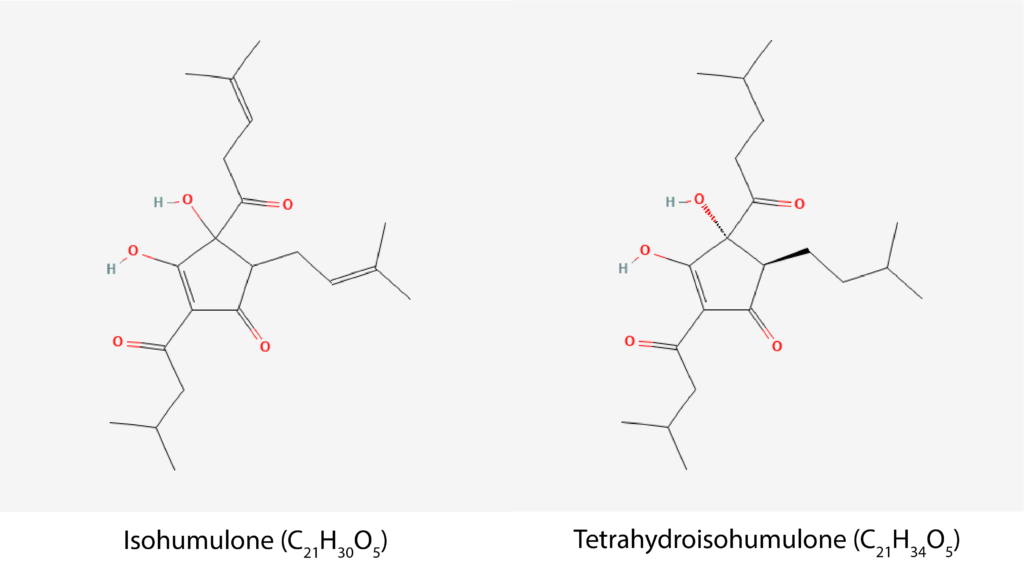
As you can see above, their chemical structures are almost identical. The main difference is that isohumulone has two unsaturated bonds, where Tetra is saturated (meaning Tetra has four additional hydrogen atoms, which is how it gets its name). Like with saturated and unsaturated fats, this makes Tetra more stable. When light hits isohumulone, it can break down and produce 3-methyl-2-butene-1-thiol, the compound behind the skunky aroma. This is why clear and green bottles (think Corona or Heineken) often smell skunky. Miller High Life, on the other hand, uses Tetra and avoids that issue even in clear bottles.
That extra hydrogen also makes Tetra more hydrophobic, which is what supports head retention. It binds well with other foam-supporting compounds in beer, creating a stable, long-lasting head. I know this was a lot of chemistry talk.
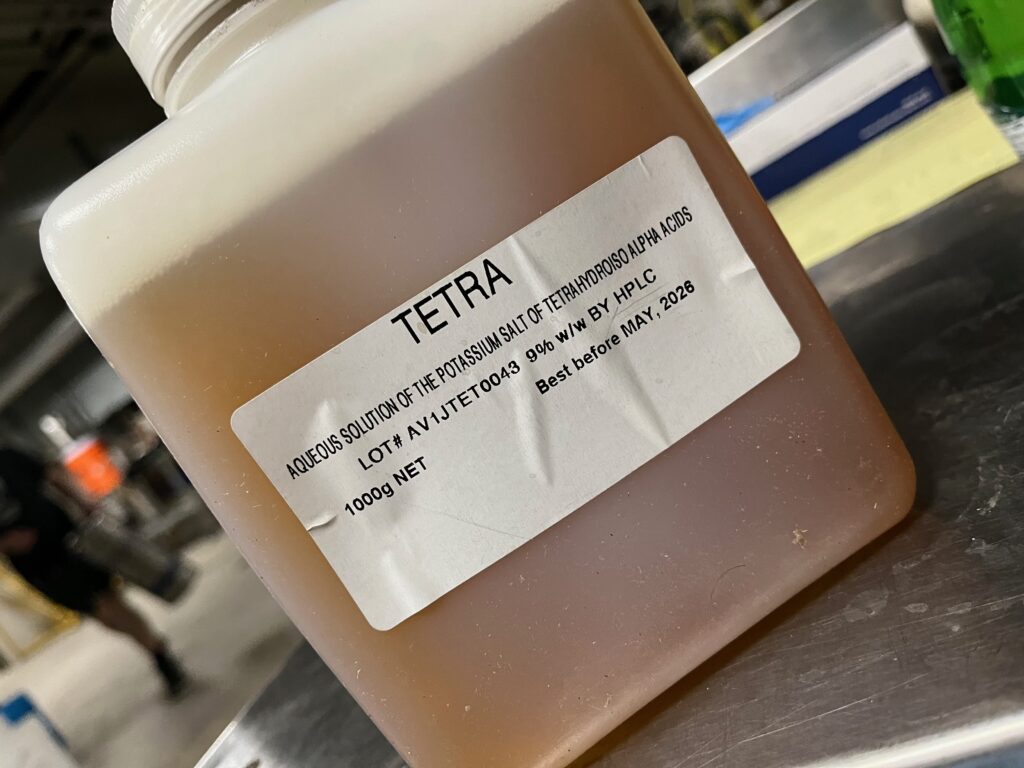
The thing is, most of what I just shared is what I learned after I got insider information that one of my local breweries uses Tetra to improve the head retention of their adjunct lagers. I just had to try it for myself. Tetra is usually only available to commercial brewers, but thanks to a well-connected friend, I managed to get my hands on some for this experiment.
Recipe (9 gal):
| Grain | Amount | Percentage |
| Pilsner Malt | 11 lbs 14 oz | 72.5% |
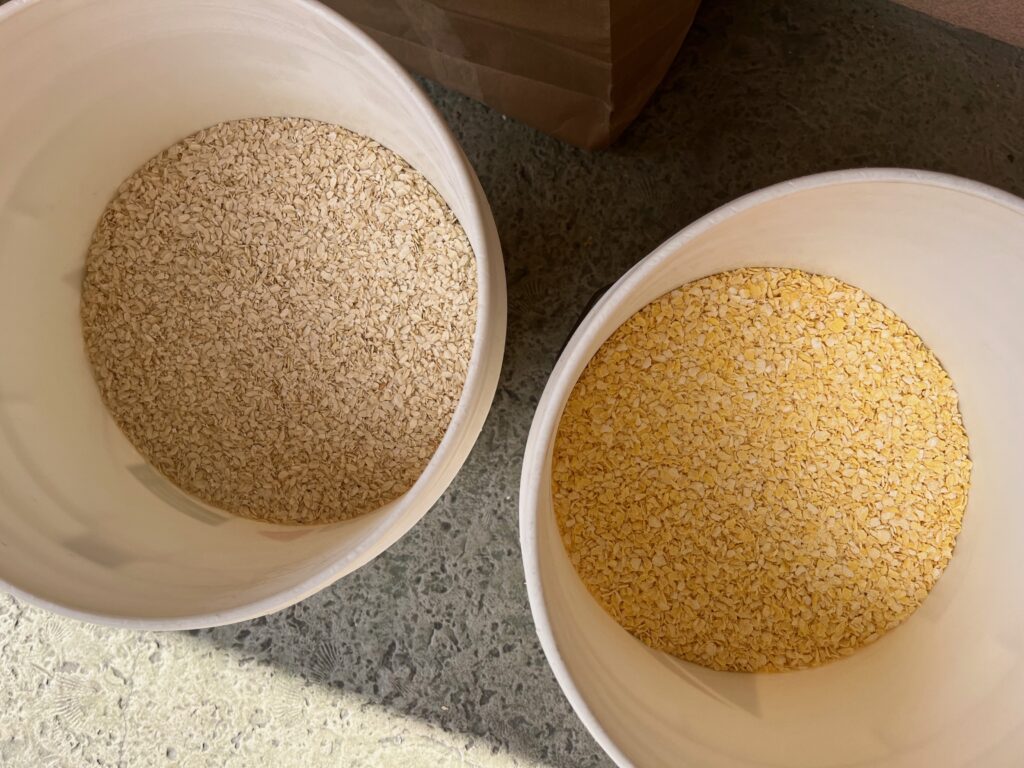
| Flaked Rice (or Flaked Corn) | 4 lbs | 24.4% |
| Melanoidin Malt | 8 oz | 3.1% |
| Water Chemistry | Ca | Mg | Na | Cl | SO4 | HCO3 |
| Concentration (ppm) | 32 | 14 | 68 | 150 | 75 | 105 |
| Mash | Temperature | Duration |
| Saccharification Rest | 148F (64C) | 60 min |
| Hops | Amount | Timing |
| Hallertauer Mittelfrueh | 2 oz | Mash (148F) 60 min |
| Hallertauer Mittelfrueh | 2 oz | Boil 30 min |
| Hallertauer Mittelfrueh | 4 oz | Cool pool (175F) 30 min |
| Yeast | Amount | Pitched Temperature |
| W-34/70 | 2000 mL starter | 55F (13C) |
| Fermentation Profile | Temperature | Duration |
| Primary | 55F (13C) | 5 days |
| Diacetyl Rest | 65F (18C) | 7 days |
| Cold Crash | 34F (1C) | 1 day |
| Misc | Amount | Timing |
| Wirlfloc | 1 tablet | Boil 5 min |
| Zinc Sulfate Heptahydrate | 1.0 ppm | Primary |
| Silafine | 9 mL | Cold Crash |
| Tetra (1.03g/ml) | 1.658 mL | Cold Crash |
Result
Interestingly, the Japanese lager had a higher mash pH, which was reflected in the final product.
| Japanese (Rice) | Mexican (Corn) | |
| Mash pH | 5.5 | 5.3 |
| OG | 1.050 | 1.050 |
| FG | 1.008 | 1.008 |
| ABV | 5.5% | 5.5% |
| pH | 4.5 | 4.3 |
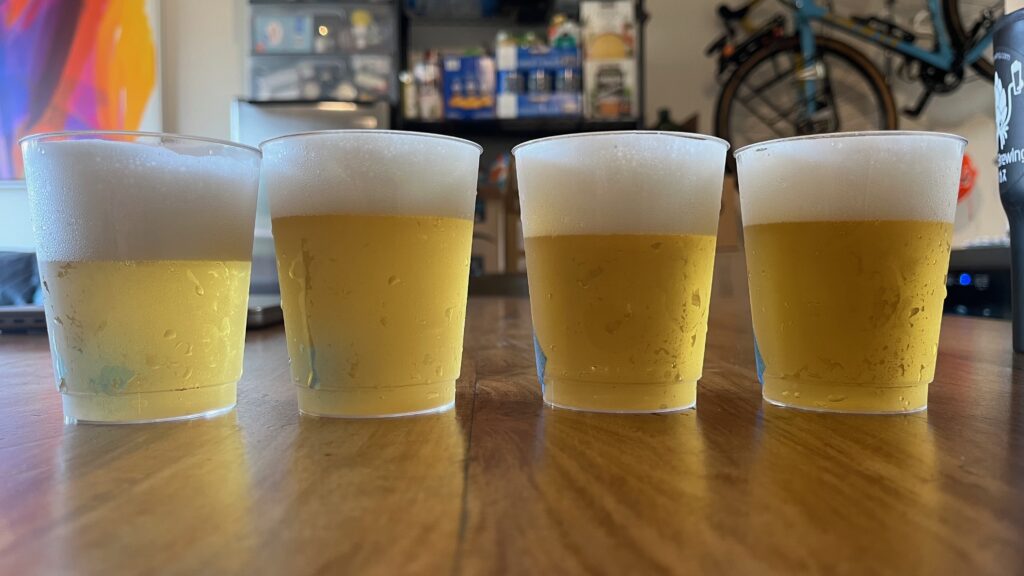
Both beers looked very clear, though the Mexican lager was slightly clearer. The Japanese lager, however, developed a larger head.
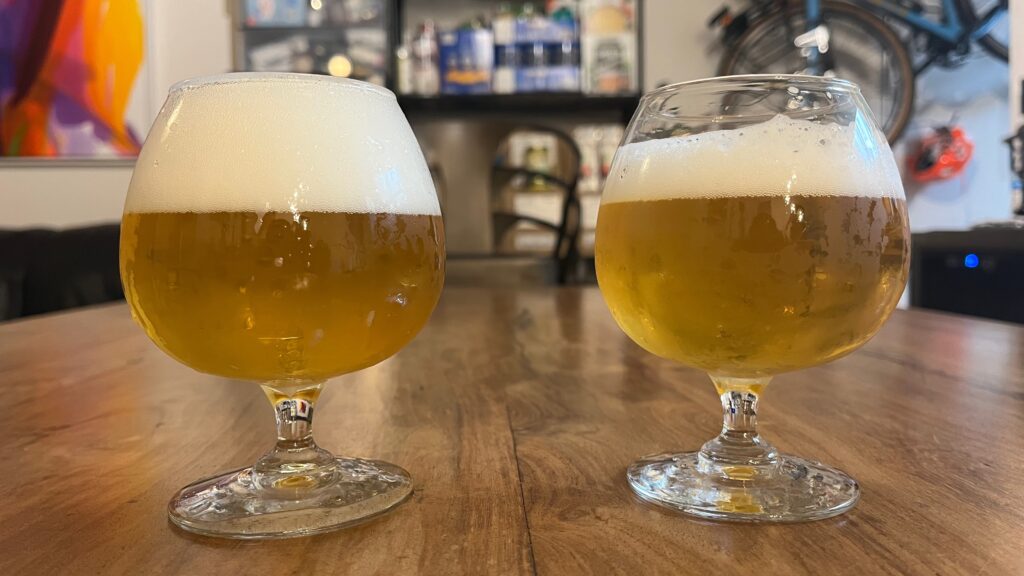
In terms of aroma and mouthfeel, the Japanese lager was more pronounced, with floral notes and a silkier texture. My trusted friend detected a slight hint of diacetyl in the Japanese lager, which I also picked up. Personally, I enjoy this “off-flavor,” so it didn’t bother me. It’s fascinating, though, as both batches were pitched with the same yeast (split in half) and fermented under identical conditions.
The Mexican lager was notably cleaner, with subdued hop aromas and the expected hint of corn. Despite the same original and final gravity, it tasted drier due to the lack of the Japanese lager’s silky mouthfeel (or perhaps the absence of diacetyl slickness).
I conducted five sequential semi-blind tests and was able to identify the unique sample four out of five times, indicating a statistically significant sensory difference.
Impact of Tetra on Head Retention:
The Japanese lager with Tetra developed a visibly taller head, suggesting that Tetra enhances head formation as well.
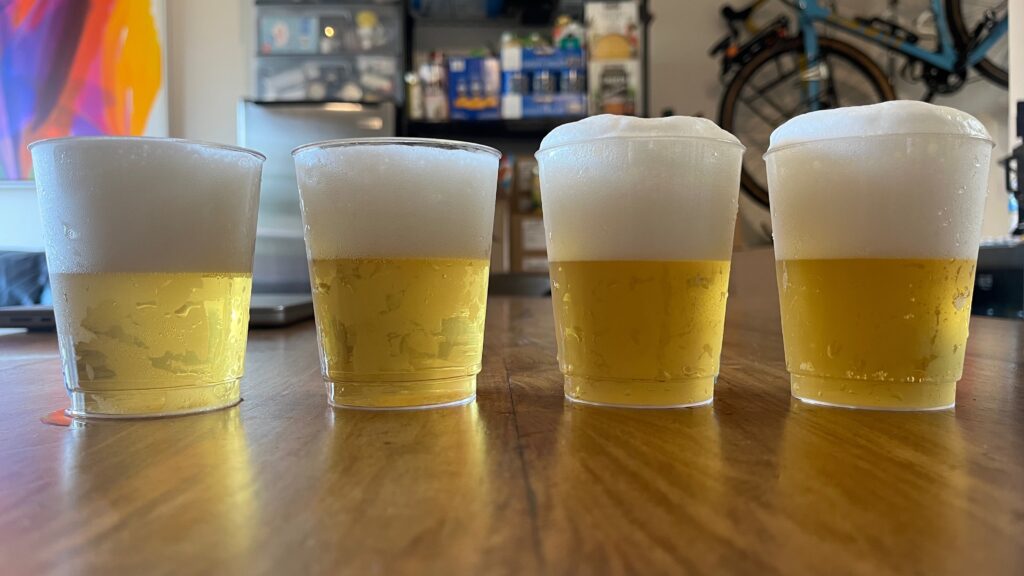
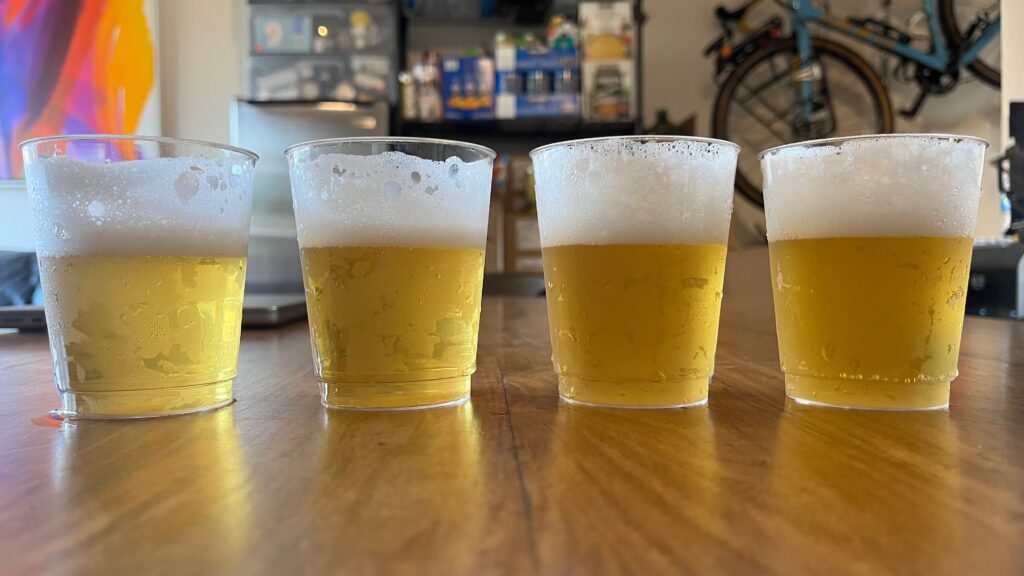
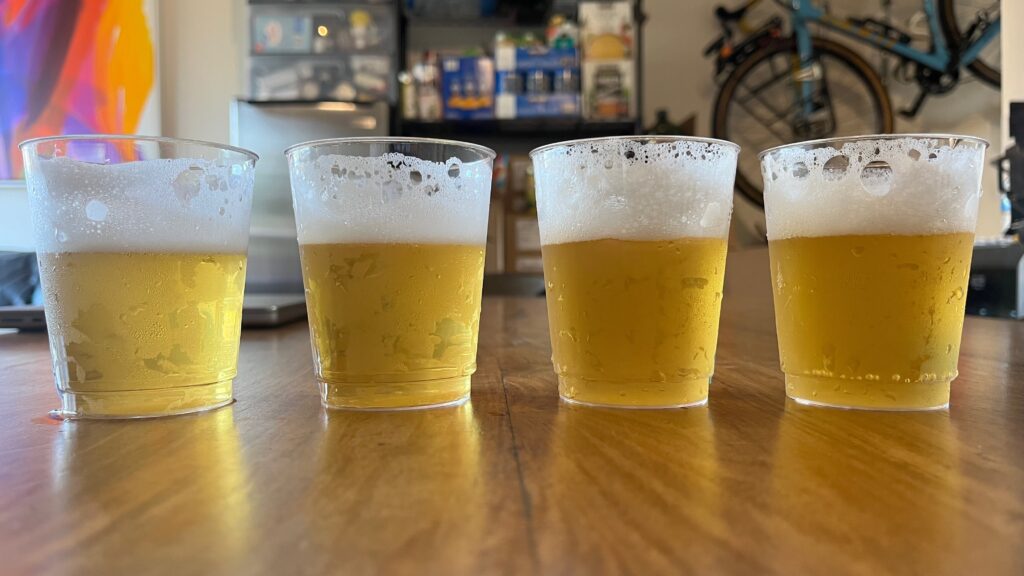
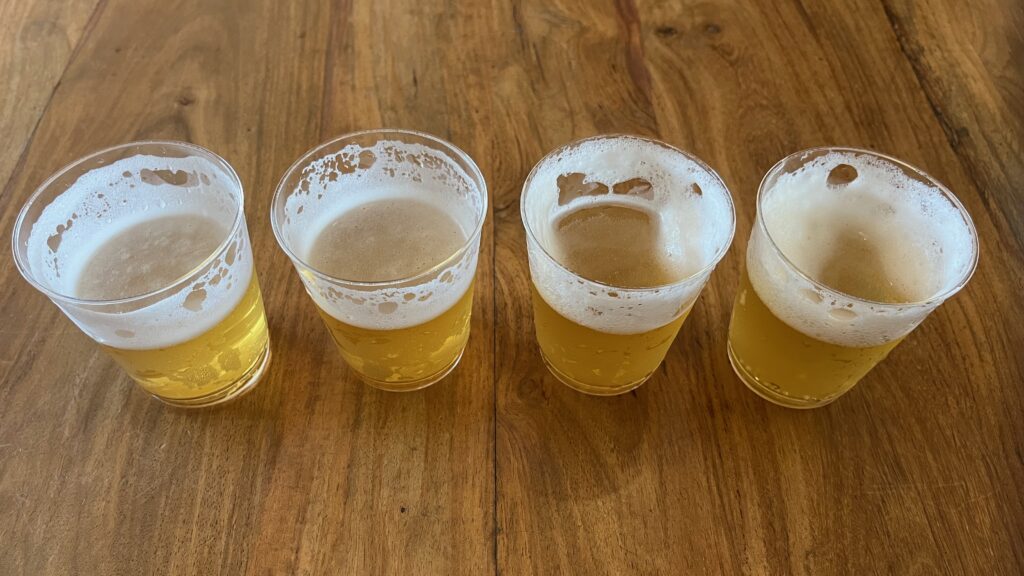
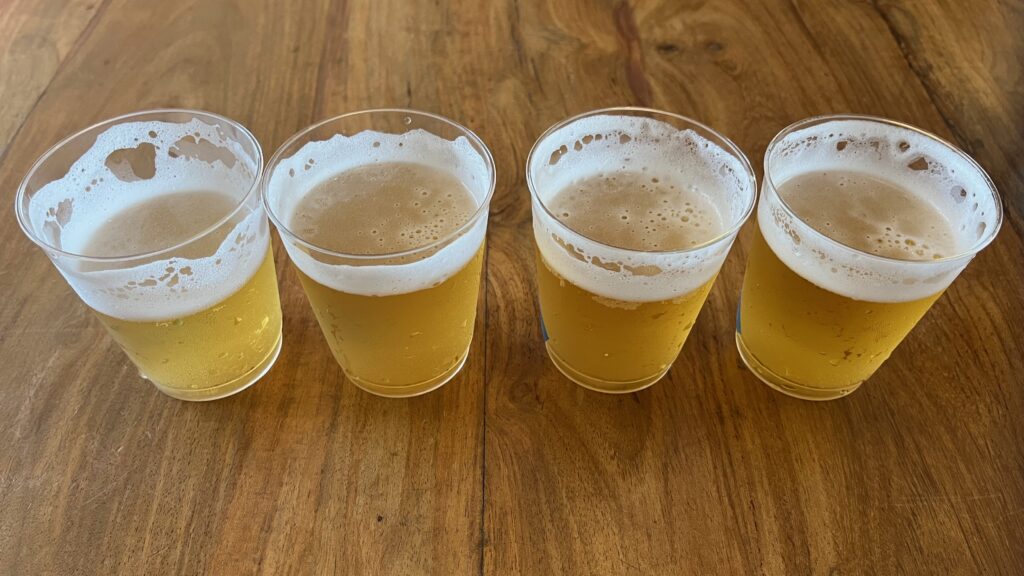
After five minutes, the foam on the non-Tetra beers had dissipated. The Tetra-enhanced foam shrank but still retained some presence.
Following foam dissipation, I conducted another set of semi-triangle tests. Tetra is expected to add about 5 IBUs, which should have resulted in a slight increase in bitterness. However, I could only identify the Tetra sample correctly two out of five times, essentially by guessing, indicating no statistically significant sensory difference in bitterness.
Interestingly, Tetra didn’t seem to affect head retention in the Mexican lager. This suggests that Tetra’s effect on head retention might vary depending on the ingredients used.
Conclusion Notes:
• The Japanese lager had a higher mash pH, larger head, floral aromas, and silkier mouthfeel.
• Diacetyl was present only in the Japanese lager, despite identical yeast and fermentation conditions.
• The Mexican lager was cleaner, with a slight hint of corn, and had a drier feel.
• Tetra enhanced head retention in the Japanese lager but had no noticeable effect on the Mexican lager, indicating that its effectiveness may be ingredient-dependent.
• Sensory differences between the Japanese and Mexican lagers were significant, while Tetra’s impact on bitterness was not.
There’s something special about exploring these classic styles and putting an Ikasu twist on them. I’m excited to bring these styles to life at Ikasu Brewing and can’t wait for our guests to experience the differences firsthand and find their own favorites!
I’m bringing these batches to the @socalcerveceros Monthly Meeting at @lajarabrewing 10/17/24, at 7:30 pm! Non-members and non-homebrewers are highly welcome! It’s going to be a fun and educational event—please come join!